
Cultura de dados, no contexto industrial, é a capacidade organizacional de transformar medições de processo em decisões repetíveis e auditáveis. A consolidação dessa prática exige rotinas estruturadas, papéis bem definidos e padrões de integração amplamente aceitos pelo mercado. Dessa forma, assegura-se que coleta, contextualização e análise de dados não dependam de conhecimento individual ou de planilhas paralelas.
O padrão ISA-95 permanece como a principal referência para estruturar a integração entre o chão de fábrica e os sistemas corporativos. A norma estabelece modelos funcionais e fronteiras claras entre os níveis de automação, permitindo organizar a comunicação entre sistemas de controle industrial, plataformas de MOM e sistemas corporativos como ERP. Essa estrutura tem suas vantagens:
- Reduz riscos de integração;
- Diminui custos de interface;
- Reforça a separação entre o domínio de manufatura e o domínio de negócios (princípio reiterado nas atualizações mais recentes do padrão).
Do ponto de vista de maturidade analítica, vale recordar a síntese de Monica Rogati sobre AI Hierarchy of Needs. Ela organiza iniciativas de dados e inteligência artificial em camadas hierárquicas, nas quais infraestrutura e qualidade de dados precedem aplicações analíticas mais avançadas. O modelo funciona como uma orientação pragmática para organizações que desejam escalar analytics sem pular etapas (Rogati, 2017).
A segurança cibernética também deve fazer parte do design das integrações industriais. A série de normas IEC 62443 fornece a base para essa abordagem ao estruturar a arquitetura de segurança em zonas e conduítes. Além disso, também estabelece requisitos para programas de segurança do proprietário do ativo e para o desenvolvimento e a integração de sistemas e componentes. Entre as práticas recomendadas estão:
- Gestão estruturada de patches;
- Segregação de redes por meio de DMZ industrial;
- Validação periódica de rotinas de backup e restore;
- Medidas essenciais para reduzir riscos e garantir a continuidade operacional.

Governança de dados aplicada à manufatura inteligente de laticínios
Para que a cultura de dados deixe o campo do discurso e passe a orientar a rotina operacional, a organização precisa estruturar um fluxo informacional simples e coerente. Nesse contexto, a governança de dados se consolida por meio de:
- Definição clara de responsabilidades sobre cada conjunto de dados,
- Adoção de um dicionário comum;
- Formalização de regras para acesso, compartilhamento e retenção das informações.
Estudos recentes em manufatura inteligente indicam que falhas de transmissão e heterogeneidade dos dados, quando não prevenidas, comprometem a confiabilidade operacional e podem induzir decisões equivocadas. Por essa razão, é mais eficaz monitorar e corrigir a qualidade da informação no ponto de captura do que tentar corrigi-la em etapas posteriores do fluxo de dados.
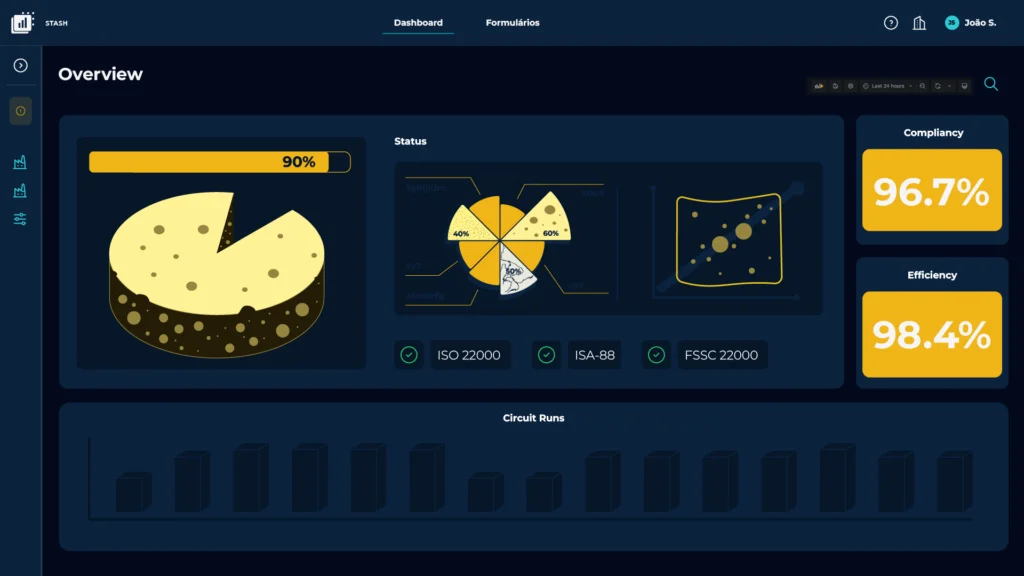
Em contextos envolvendo segurança alimentar e rastreabilidade, normas como ISO 22000 e FSSC 22000 fornecem estrutura de sistema de gestão necessária para garantir consistência e rastreabilidade das informações. Assim, os mesmos dados utilizados na operação também podem sustentar auditorias, genealogia de lote e processos de liberação de qualidade.
Na indústria de laticínios, essa lógica se traduz em decisões de projeto que tratam receitas e estados de processo como configurações controladas, com histórico de versões e alterações, em alinhamento com os princípios da norma ISA-88. Na prática, isso implica definir quais variáveis devem ser medidas e quais critérios orientam as decisões em cada etapa da produção do queijo:
- Na pasteurização, a coleta consistente de dados de temperatura de saída e tempo de retenção está diretamente associada à liberação do lote;
- Na etapa de coagulação, pH, temperatura e tempo de processo determinam o ponto de corte da massa;
- Durante a salmoura, parâmetros como salinidade, temperatura e tempo de imersão definem o teor de sal desejado no produto;
- Já na maturação, temperatura e umidade das câmaras devem permanecer registradas e auditáveis em relação ao perfil especificado para cada queijo.
CIP na produção de queijos: controle de limpeza baseado em dados
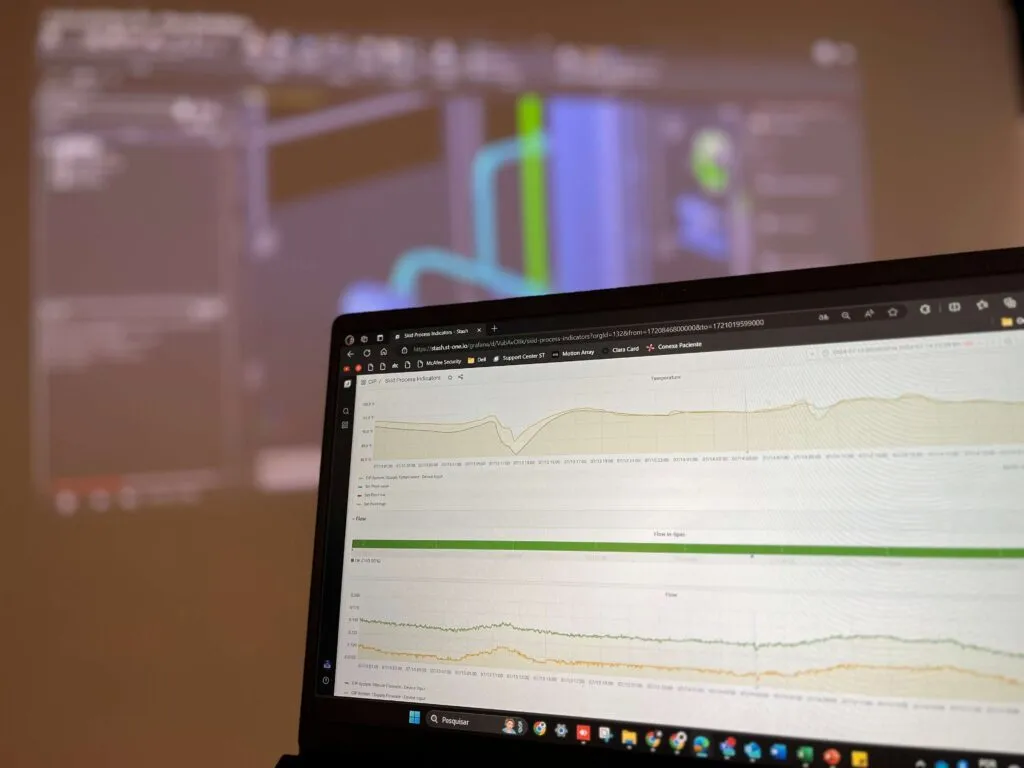
No processo de fabricação de queijos, a higienização de equipamentos costuma empregar sistemas de Clean in Place (CIP) orientados por medições de processo. Nessa abordagem, endpoints de limpeza substituem buffers fixos de tempo, permitindo que as etapas sejam determinadas por variáveis monitoradas em tempo real. A condutividade é amplamente utilizada para distinguir produto, água, soda e ácido, além de confirmar o término das etapas de enxágue.
Em situações que exigem maior sensibilidade na transição entre produto e água, sensores de turbidez óptica podem ser empregados para detectar essa mudança com maior precisão. Essa estratégia é frequentemente descrita em notas de aplicação de fornecedores, além de representar uma prática consolidada para possibilitar o reuso controlado de soluções e reduzir tempo de processo, consumo de água e de insumos químicos.
Quando esses dados passam a ser coletados de forma contínua e estruturada, torna-se possível observar padrões de operação que antes permaneciam invisíveis no dia a dia da produção. Variações em parâmetros como temperatura de processo, pH da massa, tempo de corte ou concentração de salmoura podem ser correlacionadas com rendimento, textura e perfil sensorial do queijo. Com isso, a análise histórica deixa de ser apenas um registro e passa a apoiar ajustes de processo mais consistentes entre turnos, linhas e campanhas de produção.
A consolidação dessas informações também permite ampliar a visibilidade sobre eficiência operacional e estabilidade do processo. Ao integrar dados de diferentes etapas, desde o recebimento do leite até a maturação, torna-se possível:
- Identificar desvios recorrentes;
- Compreender as causas;
- Priorizar ações de melhoria com base em evidências.
Em ambientes industriais cada vez mais conectados, a cultura de dados deixa de ser apenas um conceito organizacional e passa a se refletir diretamente no desempenho do processo. A capacidade de medir, contextualizar e interpretar variáveis críticas ao longo da fabricação do queijo cria as condições para processos mais estáveis, rastreáveis e eficientes.
Saiba mais sobre a ST-One.