
UNS ou Unified Namespace é um conceito de arquitetura criado para permitir que informações industriais circulem em tempo real, já contextualizadas, normalizadas e agregadas. Dessa forma, diferentes áreas e aplicações podem consumir os mesmos dados com consistência.
Nessa lógica, o problema central da digitalização deixa de ser apenas a captura de dados e passa a ser a transformação de medições dispersas em informações operacionais confiáveis. Com isso, evitam-se cenários em que cada nova integração gera complexidade adicional, dificultando manutenção e escalabilidade.
O contexto torna-se fundamental nesse cenário, já que dados industriais, isoladamente, não explicam tudo o que é necessário. Por exemplo, um mesmo valor pode representar temperatura, contagem, corrente ou pressão se não estiver associado ao local, ativo, etapa e condição em que foi coletado.
Luana Pinheiro explica: “[…] UNS funciona como uma “fonte única da verdade” (single source of truth), permitindo que dispositivos, sensores, máquinas e softwares troquem informações de forma eficiente, eliminando silos de dados e promovendo a interoperabilidade em ambientes industriais complexos.”
Por exemplo, em uma planta que produz adesivos industriais, onde a mistura ocorre em batelada, o CLP do misturador pode disponibilizar sinais como:
- Status (rodando/parado/alarme);
- Fase da receita;
- Temperatura;
- Rotação;
- Corrente/torque;
- Nível;
- Tempo de ciclo.
O valor do UNS está em fazer com que esses sinais deixem de existir como números isolados e passem a representar informações contextualizadas, indicando qual planta/área, qual equipamento, qual fase do processo e qual evento está ocorrendo naquele instante.
Essa forma de contextualização é um requisito para gerar entendimento real a partir dos dados, permitindo análises mais precisas, tomadas de decisão mais rápidas e a construção de aplicações industriais verdadeiramente escaláveis e interoperáveis.
Viabilizando Unified Namespace em uma fábrica
Uma das abordagens mais frequentes para implementar UNS é construí‑lo sobre um broker MQTT, utilizando uma estrutura de tópicos para representá-lo. Dessa forma, sistemas podem publicar e consumir dados por meio de assinatura, com atualizações em tempo real.
Isso é possível porque o MQTT foi projetado como um protocolo leve, baseado no padrão publish/subscribe, reduzindo o acoplamento entre quem publica e quem consome, favorecendo a distribuição de dados.
Do ponto de vista normativo, o MQTT possui especificação como ISO/IEC 20922:2016 (v3.1.1) e como padrão da OASIS (v5.0). Ele é descrito como um protocolo client-server baseado em publish/subscribe, leve e adequado a contextos com restrições de recursos:
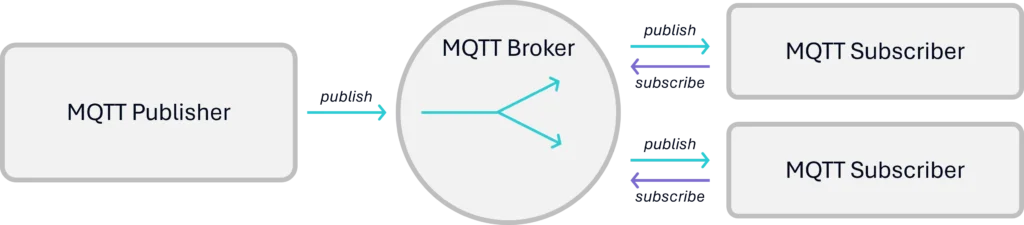
Walker Reynolds cita quatro principais requisitos para implementação de UNS, sendo um deles a função de ‘reportar por exceção’. Esse requisito significa que um dado só será transmitido quando ocorrerem mudanças relevantes, sendo uma abordagem decisiva para viabilizar escala.
Dentro desse padrão, faz diferença separar três coisas:
- O meio de transporte (MQTT);
- A organização do significado (namespace, tópicos e modelo);
- O conteúdo (o que vai dentro da mensagem).
O protocolo MQTT é responsável por transportar mensagens, mas não impõe significado nem estrutura de conteúdo. Por isso, UNS exige uma disciplina adicional: definir uma estrutura de tópicos e um contrato mínimo de dados (como unidade, timestamp, qualidade/estado e nomenclatura consistente). Caso contrário, o ecossistema pode até estar conectado, mas ainda assim pouco útil.
Nesse estágio, ISA‑95 costuma funcionar como um guia para organizar o que é publicado. Esse padrão fornece uma hierarquia amplamente reconhecida para estruturar ativos e operações, apoiando a integração entre domínios corporativos e industriais.
No exemplo do misturador que fabrica adesivos industriais, a diferença entre ter o dado e ter a informação se torna evidente quando o CLP deixa de ser apenas uma lista de tags e passa a publicar mudanças com contexto, como:
- Passagem de uma fase da receita para outra;
- Início de um alarme;
- Queda de rotação;
- Aumento de corrente/torque que sinaliza variação de carga do processo.
UNS implementado: estrutura, governança e segurança
Para que UNS seja mais do que um repositório de mensagens, é necessário definir uma estrutura de nomes que reflita a organização da operação e permita que qualquer consumidor encontre o que precisa com clareza. Nesse contexto, o protocolo ISA-95 atua como um guia, organizando o ambiente industrial em uma hierarquia consistente e estabelecendo uma base comum para integração entre sistemas.
Trazendo para o contexto de uma indústria que produz adesivos, uma árvore de UNS pode ser estruturada de forma a representar planta, área, linha, equipamento. E dentro dela, diferentes tipos de informações, como estado, variáveis de processo e eventos são agregados. Ainda que separados logicamente, todos esses dados permanecem associados ao mesmo ativo, permitindo leitura e navegação intuitiva:
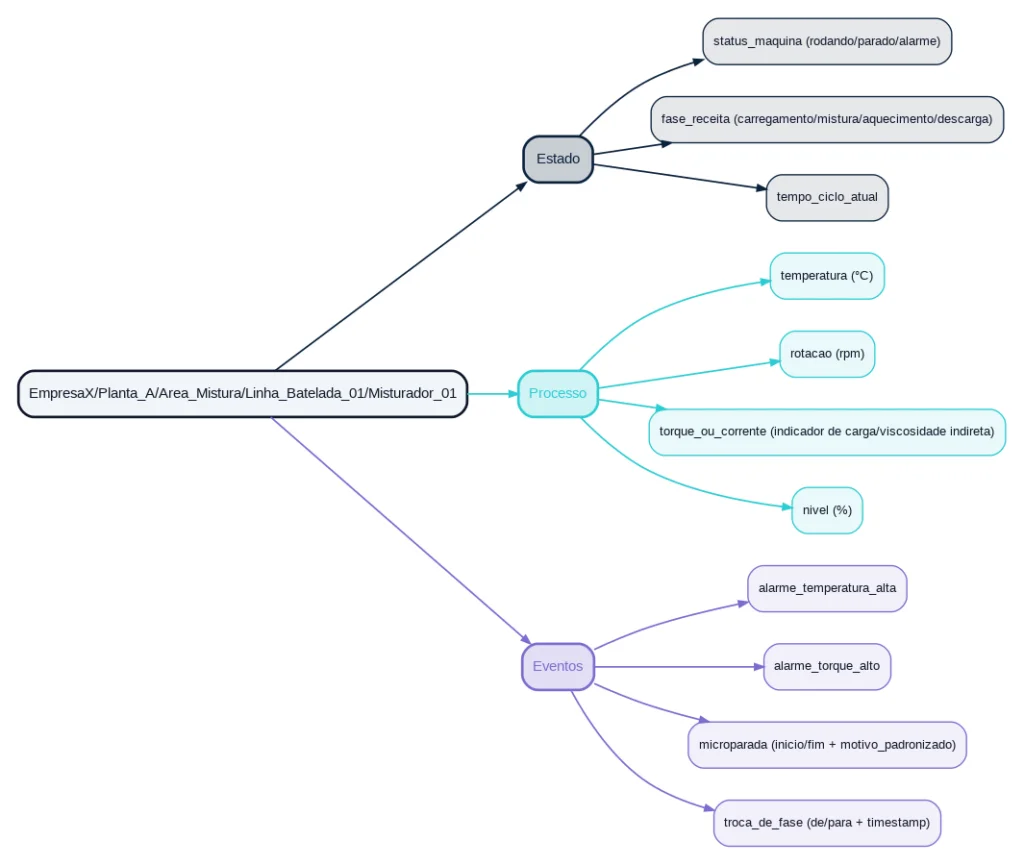
No entanto, mesmo uma estrutura bem definida não se sustenta sem um nível mínimo de governança. Em arquiteturas UNS centradas em broker, o desafio não está apenas em conectar sistemas, mas em garantir que os tópicos e os dados publicados sejam organizados de forma consistente e utilizável. Essa consistência é essencial para que diferentes consumidores possam interpretar informações em tempo real de maneira confiável.
Na prática, isso exige algumas definições fundamentais: quem é responsável por cada dado ou evento (ou seja, quem tem autoridade para publicar), quais atributos são obrigatórios (como unidade, timestamp e qualidade/estado) e como mudanças na estrutura serão controladas ao longo do tempo, evitando impactos em sistemas já integrados.
À medida que o volume de dados e consumidores aumentam, tornam-se mais relevantes as preocupações com segurança e disponibilidade. Nesse contexto, a norma IEC 62443 se consolida como uma referência para ambientes industriais, ao estabelecer diretrizes e limites que viabilizam a expansão da circulação de dados sem comprometer a resiliência operacional, em alinhamento com os princípios do UNS.
Saiba mais sobre a ST-One.